
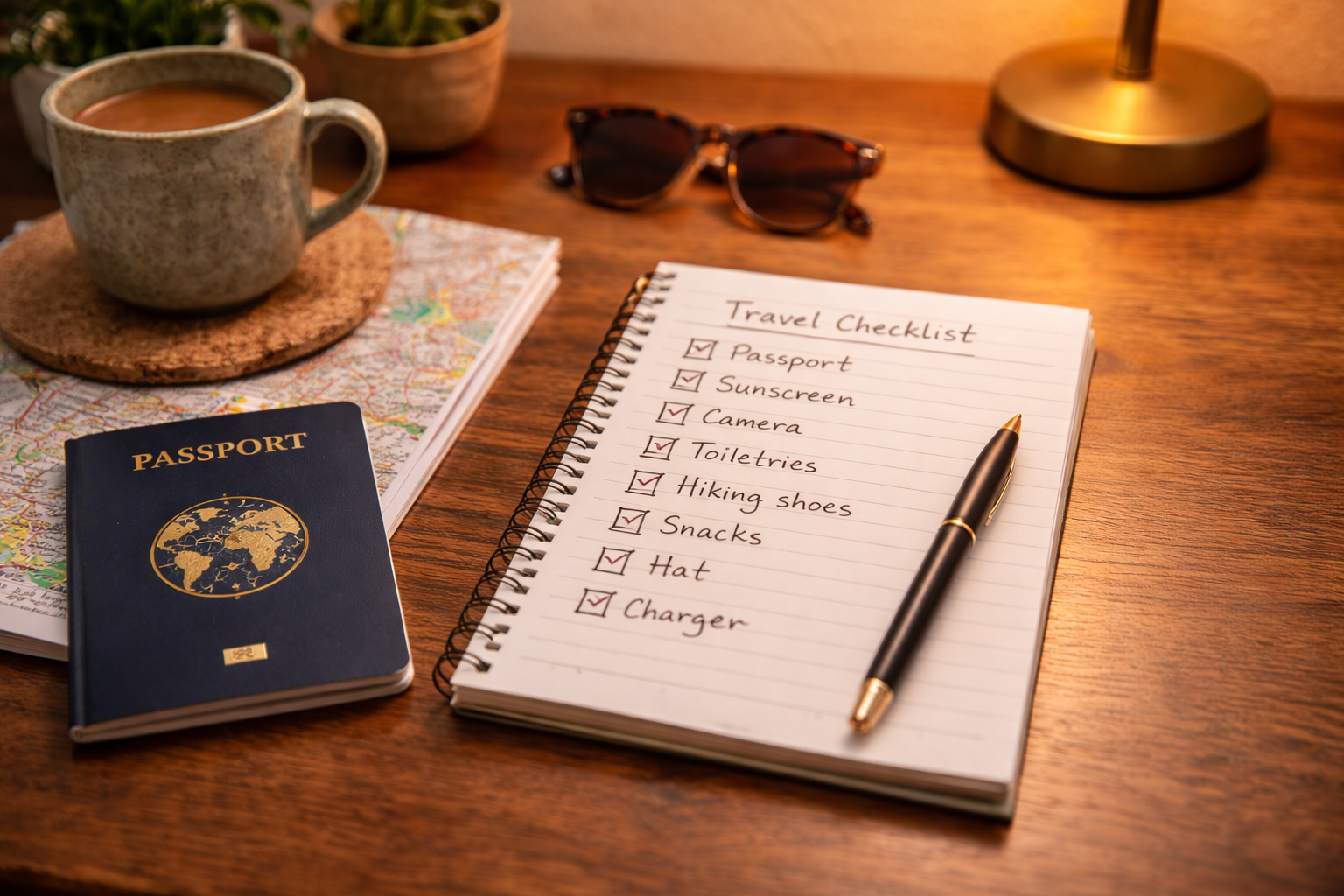
Every traveler has forgotten something important at least once. The phone charger left plugged in at home. The medication still sitting on the bathroom counter. The passport discovered missing thirty minutes before the airport. These moments of realization are universal, and they’re preventable.
The solution seems obvious: make a checklist. But most people either don’t create one, create one and don’t use it, or create one so complicated it becomes a burden rather than a tool. The challenge isn’t the concept of checklists—it’s building one that actually fits into how you travel.
This guide covers how to create a travel checklist system that prevents forgotten items without adding stress to trip preparation.
Why Generic Travel Checklists Don’t Work
The internet is full of travel packing lists, and most of them aren’t very useful. They’re either so comprehensive that they include items irrelevant to your trip, or so basic that they miss the specific things you need.
A generic list doesn’t know whether you’re going to a beach resort or a business conference. It doesn’t know your personal care routine, your electronic devices, or your medication needs. It can’t account for the weird specific things you always bring—the particular brand of earplugs you can actually sleep with, the adapter you need for your older laptop, the snack you always want during flights.
The most useful checklist is one built specifically for you, based on your travel patterns, your personal needs, and the mistakes you’ve made in the past. Creating this takes more initial effort than downloading a template, but it produces something far more useful.
Building Your Base List
Start with categories rather than individual items. Categories make the list organized and ensure you’re thinking about complete areas rather than random items.
Standard categories for most travelers include: documents and money, electronics and chargers, toiletries, clothing, shoes, accessories (belts, jewelry, sunglasses), health and medications, entertainment, and trip-specific gear.
Under each category, list items you bring on nearly every trip. These are your base items—things that go in the bag regardless of destination. Phone, charger, passport, toothbrush, underwear, prescription medications. These items don’t change much from trip to trip.
Be specific where specificity matters. “Chargers” is less useful than “phone charger, laptop charger, watch charger” because it forces you to think about each one. “Medications” is less useful than listing the actual medications you take.
Include quantities where relevant. “Shirts” doesn’t prevent you from bringing too few or too many. “4-5 shirts depending on trip length” gives you actual guidance.
Adding Trip-Specific Sections
Beyond your base list, different types of trips require different items. Building modular sections for common trip types saves you from recreating the wheel each time.
A business trip section might include: laptop, portfolio or briefcase, business cards, appropriate formal wear, extra dress shirt.
A beach trip section might include: swimsuit, sunscreen, beach cover-up, sandals, sun hat.
A winter trip section might include: heavy coat, gloves, hat, thermal layers, boots.
An international trip section might include: passport, travel adapter, backup credit card, copy of important documents.
When you’re preparing for a trip, you combine your base list with the relevant trip-specific sections. A beach vacation uses the base list plus the beach section. An international business trip uses the base list plus business and international sections.
This modular approach keeps the checklist manageable while ensuring you don’t miss trip-specific essentials.
Including Pre-Trip Tasks
The best travel checklists extend beyond packing to include tasks that need to happen before departure. These are the things you can forget to do rather than forget to bring.
Common pre-trip tasks include: check passport expiration date, notify bank of travel dates, arrange pet care, set up out-of-office email, stop mail delivery, water plants, check flight status, download offline maps, confirm reservations.
Not all tasks apply to every trip. A weekend domestic trip doesn’t require passport checks or bank notifications. But having the full list means you can quickly scan for relevant items rather than trying to remember everything from scratch.
Include timing guidance where it matters. “Check passport expiration” should happen weeks before international travel, not the night before. “Download offline maps” can wait until closer to departure.
Making the Checklist Accessible
A checklist that’s hard to find or access won’t get used consistently. The best location for your list depends on how you prefer to work.
A digital list works well for people who are always on their phones or computers. Notes apps, task managers, or dedicated packing apps let you check items off, reset the list for the next trip, and access it anywhere. The list syncs across devices, so you can reference it whether you’re at home packing or at the store picking up last-minute items.
A paper list works well for people who think better on paper or find screens distracting. Print the checklist and keep copies in your luggage or wherever you store travel supplies. The physical act of checking boxes helps some people process more thoroughly than tapping a screen.
Whichever format you choose, the list needs to be somewhere you’ll actually look. A beautifully organized checklist buried in a folder you never open is useless. Put it where it naturally fits your trip preparation process.
Using the Checklist Effectively
Having a checklist is step one. Using it properly is step two.
Start the checklist several days before departure, not the night before. This gives you time to notice missing items you need to buy, laundry that needs to be done, or tasks that require advance coordination.
Go through the list category by category, not randomly. This systematic approach ensures you don’t skip sections and keeps related items grouped in your thinking.
Check items only when they’re actually packed or completed, not when you’re planning to pack them. The distinction matters—a list of intentions is less useful than a list of what’s actually done.
Do a final pass through the checklist on departure day, focusing on items that couldn’t be packed earlier: phone off the charger, perishables from the fridge, items you used that morning.
Updating Based on Experience
Every trip teaches you something about what you need and what you don’t. A good checklist evolves based on this experience.
After each trip, note items you brought but didn’t use. If something goes unused multiple trips in a row, consider removing it from your base list or being more selective about when to include it.
Note items you wished you had. If you’re consistently wanting something that’s not on your list, add it. The best additions come from actual experience rather than hypothetical planning.
Note packing or preparation failures. If you forgot something despite having a checklist, figure out why. Was the item not on the list? Was it on the list but you skipped checking it? Did you check it but forget anyway? Different problems have different solutions.
This feedback loop makes your checklist more accurate over time. A checklist you’ve refined through a dozen trips is far more useful than one you created theoretically without testing.
Common Checklist Mistakes
Some approaches to checklists undermine their usefulness.
Making the list too long defeats the purpose. If your checklist has hundreds of items, you won’t read it carefully. Stick to items that you genuinely might forget—things that are truly automatic (wearing clothes to the airport) don’t need to be on the list.
Being too vague creates ambiguity. “Clothes” doesn’t help you pack. “3 pants, 5 shirts, 7 underwear, 2 pairs shoes” is actionable guidance.
Not customizing the list for your actual needs wastes time. You’ll constantly skip irrelevant items or miss things that are important to you specifically.
Treating the checklist as optional when you’re feeling confident leads to exactly the kind of mistakes checklists prevent. Confidence is when you’re most likely to overlook something. Use the list every time.
A travel checklist isn’t about lacking trust in your own memory. It’s about freeing your memory for things that matter while ensuring routine items don’t slip through the cracks. When packing becomes a systematic process rather than a test of recall, trips start better and the stress of preparation drops significantly.