
Two weeks in a carry-on sounds impossible if you’ve always checked bags for anything longer than a weekend. But experienced travelers do it routinely—not because they have magical packing abilities, but because they’ve learned to think differently about what they actually need versus what they think they might need.
Packing light isn’t about suffering through a trip with inadequate clothing. It’s about choosing strategically, using your clothes more efficiently, and enjoying the benefits of traveling without checked luggage—no waiting at baggage claim, no risk of lost bags, no fees on many airlines, and the freedom to change plans without worrying about where your stuff is.
This guide covers how to pack for a two-week trip using only a carry-on, with realistic expectations for different types of travel.
Understanding the Carry-On Constraints
Before you pack, know your limits. Most airlines allow a carry-on bag around 22 x 14 x 9 inches, though this varies. Budget airlines often have smaller allowances or stricter enforcement. Check your specific airline before assuming your bag will work.
Beyond dimensions, weight can matter. Some international carriers enforce weight limits for carry-ons (often around 15-22 pounds), and a stuffed bag gets heavy fast. Others don’t weigh carry-ons at all.
The personal item allowance—a small bag that goes under the seat—adds valuable space. A backpack, large purse, or laptop bag can hold items you’ll want during the flight plus overflow from your main bag.
These constraints seem limiting, but they’re actually generous once you learn to pack efficiently. A standard carry-on holds more than most people realize when packed well.
The Core Wardrobe Approach
The key to two weeks in a carry-on is choosing clothes that work together, not bringing a different outfit for every day.
Start by choosing a color palette. This isn’t about being fashionable—it’s about ensuring everything matches. If all your clothes coordinate, you can mix and match freely, creating variety from fewer pieces. Neutral bases (black, navy, gray, khaki) combined with one or two accent colors work for most people.
For two weeks, a realistic packing list looks something like this: four to five tops, two to three bottoms, one dress or additional versatile piece if needed, seven to eight pairs of underwear, four to five pairs of socks, one pair of pajamas, one sweater or light jacket, and two pairs of shoes (one on your feet, one in the bag).
This might seem like too few clothes, but the math works. You wear each top once or twice, rotating through your options. You rewear pants and shorts since they don’t need washing as often. Underwear and socks get washed in the sink or at a laundromat once during a two-week trip.
Choose fabrics that travel well—wrinkle-resistant, quick-drying, and lightweight. Technical travel clothing works but isn’t required. Many regular clothes in synthetic blends, merino wool, or light cotton function well for travel.
What to Leave Behind
Packing light is as much about what you don’t bring as what you do.
Skip the “just in case” items. That extra pair of shoes for the one fancy dinner you might attend, the book you’ll read “if you have time,” the additional jacket because the weather might change—these items add up fast and usually go untouched. If something is genuinely unlikely to be needed, leave it.
Don’t pack for imaginary scenarios. You’re not bringing formal wear unless you have a specific formal event. You’re not bringing a week’s worth of workout clothes unless you’re certain you’ll exercise daily. Pack for your actual trip, not the ideal version you imagine.
Toiletries are a common packing trap. You don’t need full-size products for two weeks. Solid toiletries (shampoo bars, solid deodorant) save space and avoid liquid restrictions. Most destinations sell toiletries if you run out or forget something—you’re not traveling to the wilderness.
Minimize electronics beyond the essentials. Phone, charger, and maybe a tablet or e-reader. Multiple cameras, laptops, and gadgets add weight and stress. Decide what you’ll actually use and leave the rest.
Packing Techniques That Actually Work
How you pack matters as much as what you pack.
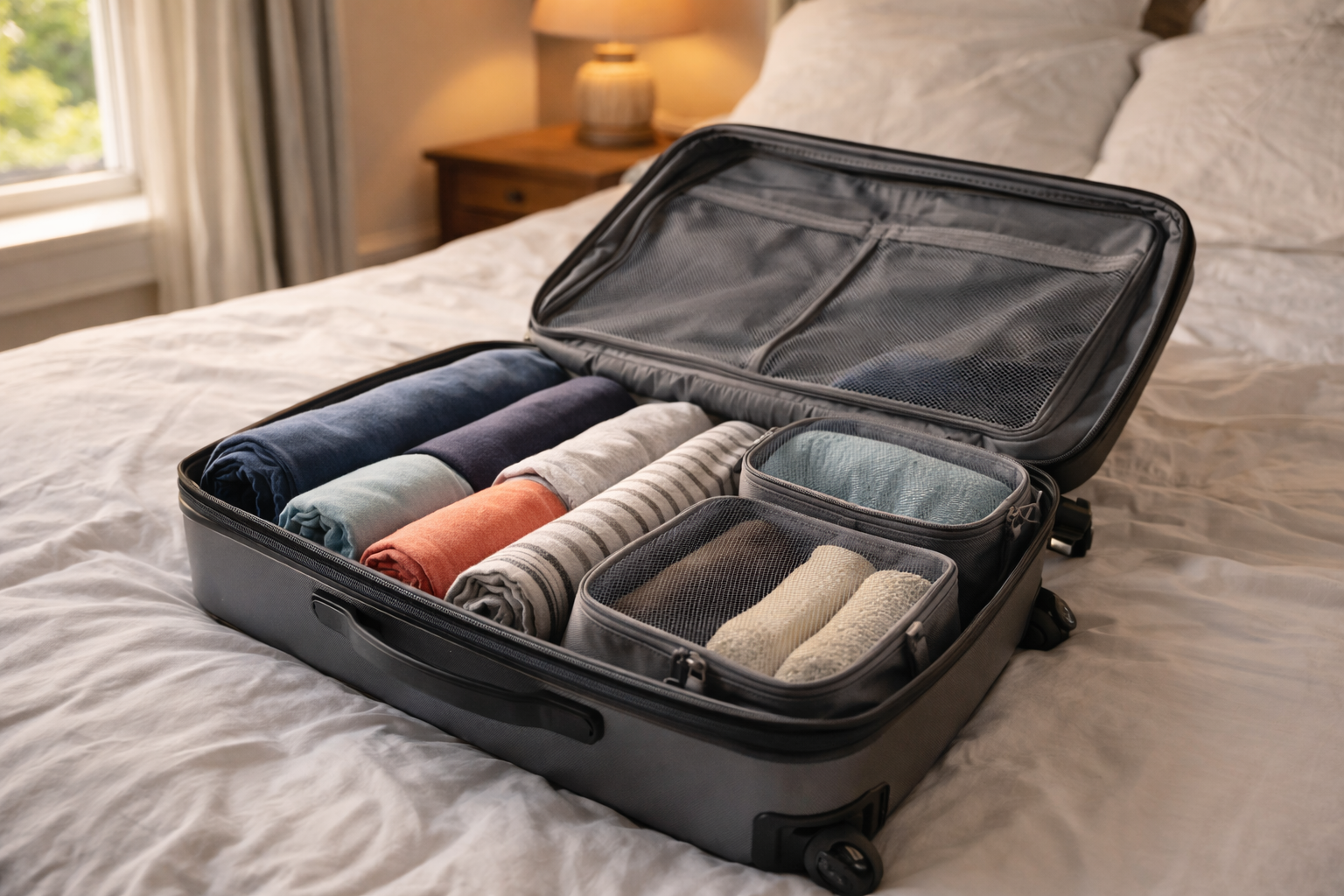
Rolling versus folding is a long-standing debate. Rolling works well for casual clothes—t-shirts, underwear, lightweight pants. It saves space and reduces wrinkles for most items. Folding works better for structured items like button-down shirts or blazers. Many people use a combination.
Packing cubes transform carry-on packing. These zippered pouches compress clothes and keep categories separate—one cube for tops, one for bottoms, one for underwear and socks. They make finding things easy without unpacking everything and they compress your clothes to use space more efficiently.
Put heavy items at the bottom of the bag (or the back, if it’s a backpack-style bag) to keep the center of gravity stable. Shoes go in bags to keep them away from clothes, and stuff socks or small items inside shoes to use that space.
Wear your bulkiest items during travel. The jacket, the heavy shoes, the thickest pants—all of these should be on your body during transit, not in your bag. This frees significant space and keeps the bag under weight limits.
Liquids go in a clear quart bag for security screening. Stick to the 3.4-ounce limit per container. If you’re committed to carry-on only, this limitation forces good decisions—you can’t bring a full-size bottle of shampoo, so you bring less or find solid alternatives.
Managing Laundry During Your Trip
Two weeks without doing any laundry requires either packing way too much or accepting some re-wearing of clothes. Most carry-on travelers do laundry at least once during a two-week trip.
Sink washing handles underwear, socks, and light tops easily. Bring a small tube of travel laundry soap or use hotel shampoo in a pinch. Wash items in the sink, wring them out, and hang them to dry overnight. Quick-drying fabrics make this much more practical.
Laundromats exist in most destinations and provide a thorough wash for everything. Budget an hour or two to do laundry once during your trip—many travelers combine it with catching up on reading or planning the next few days.
Some hotels offer laundry service, though this is often expensive. Laundromats are almost always cheaper unless the hotel includes laundry in the room rate.
Plan your laundry timing so you’re not running out of clean clothes. Doing laundry around day seven or eight of a two-week trip works well for most people.
Adapting for Different Trip Types
The core approach stays the same, but specific trips require adjustments.
Business travel means including at least one appropriate outfit, which takes more space than casual clothes. Reduce casual items to compensate. A wrinkle-resistant blazer that works for meetings and dinners justifies its space.
Beach or warm-weather trips are actually easier for carry-on packing. Light fabrics, sandals, and swimwear take minimal space. You might even have room to spare.
Cold-weather destinations are harder. Bulky sweaters and heavy coats fill bags fast. The solution is layering with thin pieces rather than relying on one heavy jacket, and wearing your heaviest items during transit.
Active trips requiring special gear (hiking boots, snorkel equipment, ski clothes) often push the limits of carry-on only. Sometimes checking a bag is the better choice if the activities genuinely require specialized items you can’t rent at the destination.
Multi-climate trips—going from hot beaches to cold mountains—require the most planning. Focus on versatile layers, leave behind items that only work in one climate, and accept that you might need to buy or borrow something at your destination.
Making Peace With Having Less
The psychological barrier to carry-on packing is often bigger than the practical one. The anxiety that you won’t have what you need is powerful, even when evidence shows you’ll be fine.
Remind yourself that most destinations have stores. Forgetting something isn’t a crisis—it’s an errand. The things you truly can’t replace (passport, medications, essential electronics) should always be in your carry-on anyway.
Notice what you don’t wear when you travel. After a trip, look at what stayed in your bag unworn. This data helps you pack lighter next time. Most people discover they bring far more than they use.
The benefits of carry-on travel become obvious once you experience them. Walking past the baggage carousel and straight out of the airport, changing flights without worrying about your luggage keeping up, having everything with you on trains and buses—these advantages are worth the slight reduction in wardrobe options.
Packing a carry-on for two weeks isn’t about deprivation. It’s about clarity on what you actually need versus what habit tells you to bring. With practice, it becomes not just possible but preferable.