
If you spend a significant part of your day in your car—commuting, running errands, shuttling kids, or traveling for work—it’s only a matter of time before the interior starts to resemble a mobile storage unit. Receipts pile up in the center console. Water bottles roll under seats. Jackets, bags, and random items accumulate until you can barely see the floor mats.
The problem isn’t that you’re messy. It’s that cars aren’t designed with daily living in mind, and most people never establish a system for keeping things in order. This article covers practical ways to organize your vehicle so it stays functional and comfortable, even when you’re spending hours in it every day.
Why Car Clutter Accumulates So Quickly
Cars have limited storage, and what exists isn’t always practical. Glove boxes fill up with registration papers and manuals. Center consoles become catch-alls for everything from charging cables to loose change. Door pockets overflow with napkins and receipts.
The bigger issue is that most people treat their car as a transition space rather than a space that needs maintenance. You get in, drive somewhere, and get out. Stuff comes in but rarely goes out. Over weeks and months, this one-way flow creates clutter that’s annoying to deal with but easy to ignore—until you need to find something or give someone a ride.
Understanding this pattern is the first step toward fixing it. Keeping a car organized isn’t about a one-time deep clean. It’s about building habits and systems that prevent the buildup from happening in the first place.
Establish Zones for Different Items
Just like organizing a home, car organization works best when everything has a designated place. The key is matching zones to how you actually use the space.
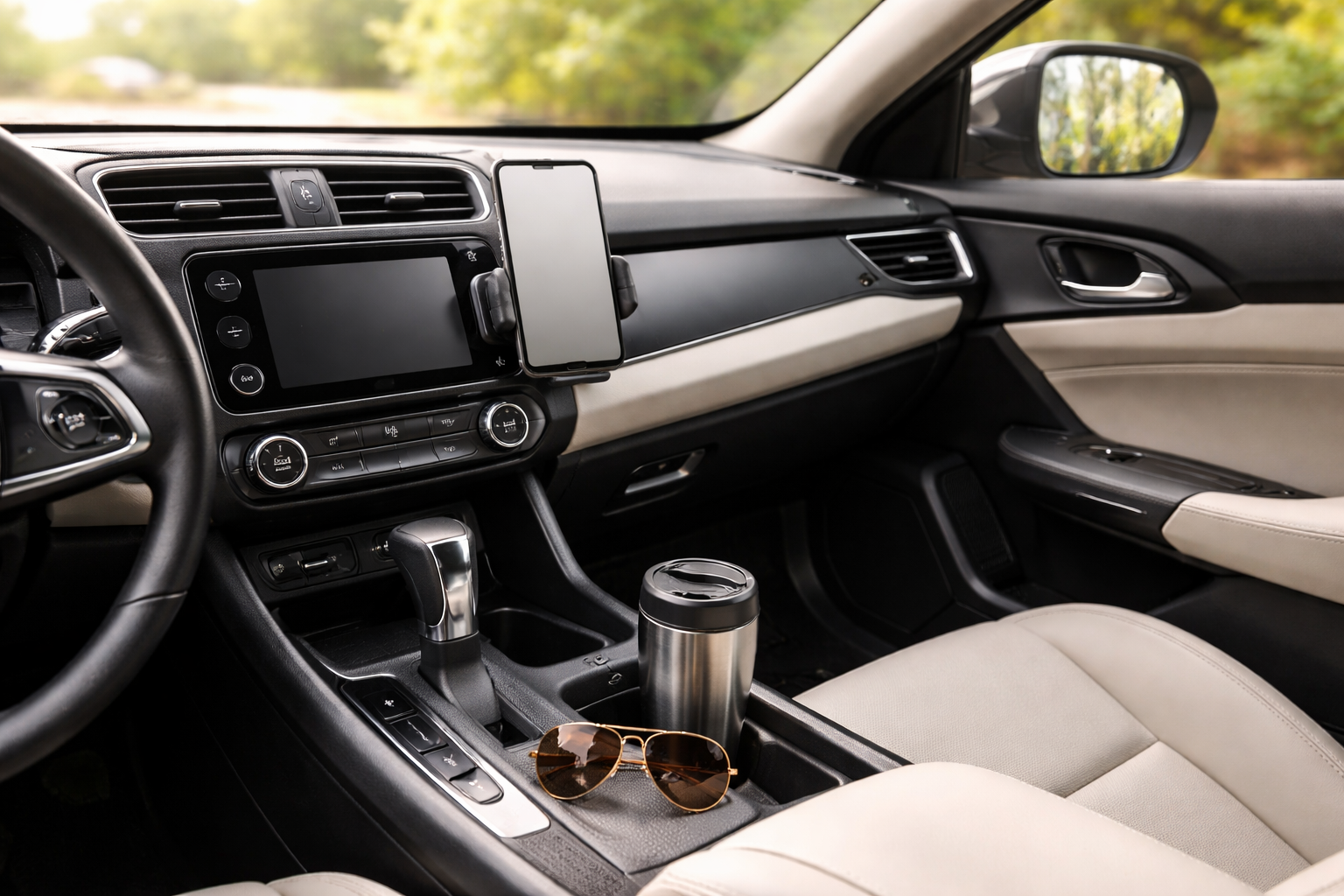
The driver’s area should hold only what you need while driving: phone mount, sunglasses, maybe a water bottle. Anything else is a distraction or clutter. The center console works well for items you access frequently—charging cables, toll pass, hand sanitizer—but only if you limit what goes there.
The passenger seat and floor area tend to become dumping grounds. If you regularly carry a bag, designate a spot for it and stick to that spot. If items tend to migrate to the passenger seat, consider a small organizer that sits on the seat or floor to contain them.
The back seat is where most clutter lives, especially for families. Seatback organizers with pockets can hold tablets, books, snacks, and toys without letting them scatter across the seats. If you don’t have passengers often, the back seat can serve as a specific-purpose zone—gym bag goes here, groceries go there—rather than an open landing pad for whatever.
The trunk or cargo area needs its own system. Collapsible bins or crates keep things from sliding around and make it easy to carry items in and out. One bin for emergency supplies, one for reusable bags, one for sports equipment—whatever categories make sense for your life.
The Daily Exit Habit
The single most effective way to keep your car organized is to remove items every time you exit. This sounds simple, but most people don’t do it consistently.
When you arrive home or at your final destination, take thirty seconds to scan the car. Grab any trash, receipts, or items that don’t belong. Bring in anything you brought out that day. This small habit prevents the slow accumulation that leads to serious clutter.
The trick is making it automatic rather than optional. Leave a small trash bag in the car so garbage has a place to go until you exit. Keep a reusable tote on the passenger floor for items that need to come inside. These tools make the exit habit easier to maintain.
Some people do a quick car reset every Sunday—removing everything that accumulated during the week, wiping down surfaces, and restoring order. This works as a backup, but it’s more effort than daily maintenance and allows clutter to build up in the meantime.
Storage Solutions That Actually Work
The car accessories market is full of organizers, and most of them aren’t worth buying. The best solutions are simple, durable, and matched to your specific needs.
A seatback organizer is useful if you have kids or passengers who need access to items during drives. Look for one with pockets sized for what you’ll actually store—tablets, water bottles, snacks—rather than fancy features you won’t use.
A center console organizer can transform a messy catch-all into functional storage. Trays with compartments keep small items separated so you can find them without digging. Make sure whatever you buy fits your specific vehicle, as console sizes vary widely.
Trunk organizers range from simple collapsible crates to elaborate systems with multiple compartments. For most people, two or three basic bins work better than complex setups. They’re easier to remove when you need the full trunk space and simpler to maintain.
A small trash container with a lid keeps garbage contained without looking or smelling unpleasant. Some clip to the back of the front seat; others sit on the floor. The key is having somewhere for trash to go other than the cup holder or door pocket.
Cord organizers or clips keep charging cables from tangling or falling between seats. Magnetic mounts or clips that attach to vents or the dashboard work well for keeping cords accessible but tidy.
Managing Specific Problem Items
Certain items cause disproportionate clutter in cars. Addressing them specifically makes a bigger difference than general organizing.
Receipts and papers accumulate fast, especially if you’re in and out of drive-throughs or parking garages. Designate one spot—a small envelope in the glove box or a clip on the visor—for papers you need to keep temporarily. Everything else goes in the trash immediately.
Water bottles and beverage containers multiply mysteriously. Limit yourself to one reusable bottle that you bring in and out each day. If disposable bottles accumulate, they go in the trash bag at your next exit.
Kids’ items require their own system. A small backpack or bin that stays in the car can hold the essentials—a few toys, books, snacks—without spreading across the entire back seat. Anything brought in for a specific trip goes home with the kid when you arrive.
Work materials like laptops, files, and bags need a consistent place. The passenger seat or floor works if you’re the only one in the car. Otherwise, the back seat or trunk keeps them secure and out of the way.
Seasonal items like umbrellas, ice scrapers, and sunscreen have a way of floating around the car. Store them in a specific pocket or bin so they’re findable when you need them but not cluttering spaces meant for other things.
Keeping It Clean, Not Just Organized
Organization and cleanliness overlap but aren’t the same. A well-organized car can still feel unpleasant if it’s dirty.
Keep a small pack of wipes in the glove box or door pocket for quick cleanups. Wiping down the steering wheel, dashboard, and cup holders takes a minute and makes a noticeable difference in how the car feels.
Floor mats catch a lot of debris. Shake them out or vacuum them every few weeks, or whenever you notice dirt building up. All-weather mats are easier to clean than carpet ones if you’re in a climate with rain, snow, or mud.
Windows and mirrors get smudged and dusty, affecting both appearance and visibility. A quick wipe with glass cleaner during your regular gas station stops keeps them clear without requiring a dedicated cleaning session.
The key is small, frequent maintenance rather than occasional deep cleans. Ten minutes a week keeps a car in decent shape. Waiting until it’s truly dirty means spending an hour or more bringing it back to baseline.
Making Organization Sustainable
Systems only work if you maintain them, and maintenance only happens if it’s easy. The best car organization approach is the simplest one you’ll actually follow.
Start with the biggest pain point. If your center console is chaos, fix that first. If the back seat is the problem, address it before worrying about other areas. Trying to overhaul everything at once leads to burnout and abandoned systems.
Resist the urge to over-organize. Too many bins, pouches, and organizers create their own kind of clutter and make the car feel cramped. A few well-chosen solutions beat a complicated system.
Accept that some clutter is inevitable. The goal isn’t a showroom car—it’s a functional space where you can find what you need and feel comfortable spending time. Perfect organization isn’t realistic for a vehicle that’s used daily for real life.
A car that works for your actual routine, stays reasonably clean, and doesn’t embarrass you when passengers get in—that’s the realistic standard. Systems that support that standard without requiring constant effort are the ones worth building.