
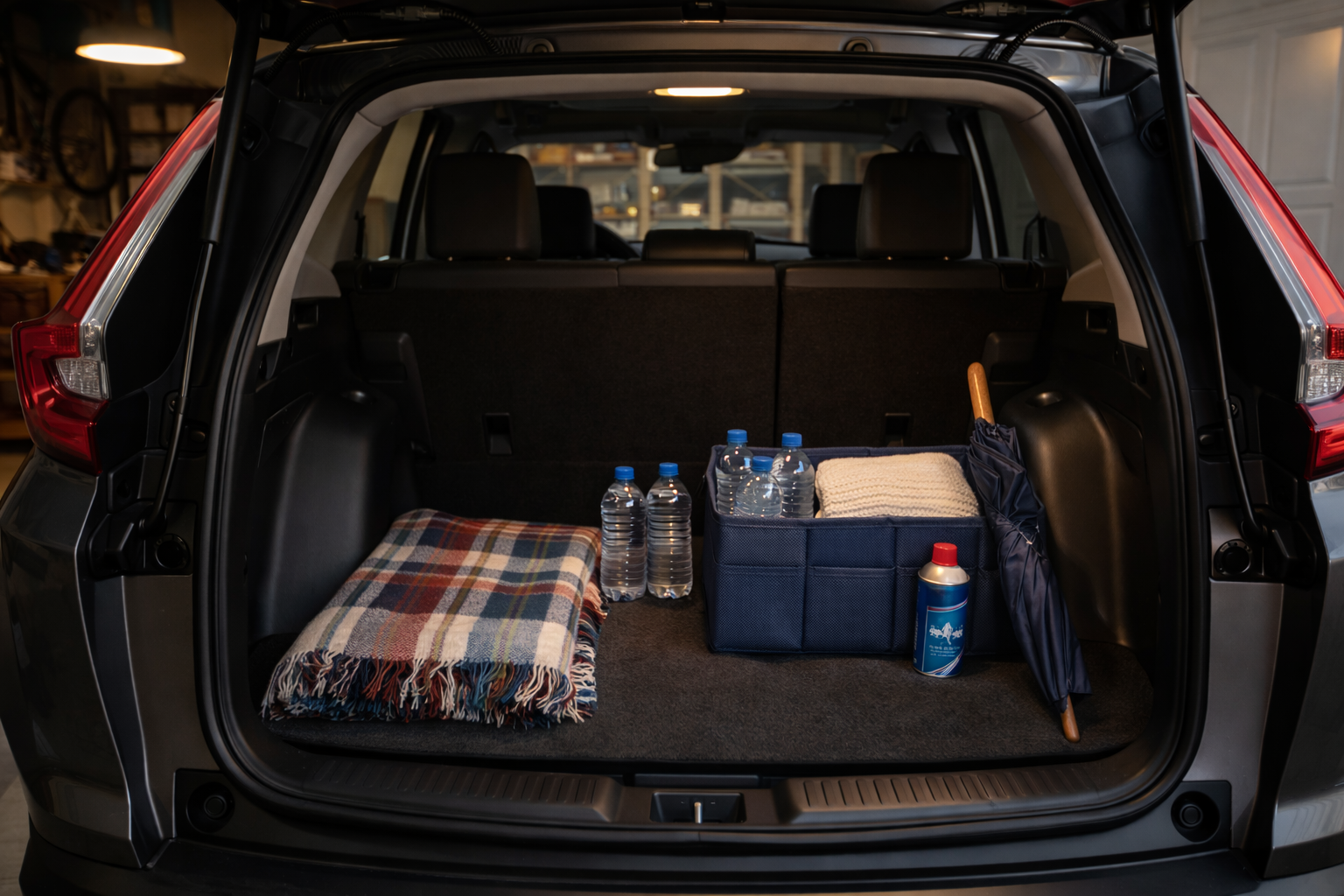
Somewhere between having nothing in your car and stuffing it with supplies for every possible disaster lies a practical middle ground. The right items kept in your vehicle can handle common inconveniences and minor emergencies without turning your trunk into a survival bunker.
What belongs in your car changes with the weather, but a solid year-round kit covers most situations regardless of season. This guide walks through what to keep in your vehicle at all times, plus seasonal additions that make sense when conditions change.
The Year-Round Essentials
Some items belong in your car regardless of what month it is. These cover the situations most likely to actually happen.
A phone charger—specifically a car charger and cable that stays in the vehicle—prevents the dead phone problem that turns minor inconveniences into genuine difficulties. Being stranded without the ability to call for help or look up directions is entirely preventable.
Jumper cables or a portable jump starter handles dead batteries, one of the most common roadside issues. Traditional cables require another car and someone who knows what they’re doing. Portable jump starters work alone but need occasional charging. Either option is better than waiting for roadside assistance for something this simple.
A basic first aid kit covers minor injuries—bandages, antiseptic wipes, pain relievers, tweezers. You’re not performing surgery from your trunk, but you can handle a cut, headache, or splinter without searching for a pharmacy.
A flashlight with extra batteries serves multiple purposes. Changing a tire in the dark, looking for something dropped under a seat, signaling for help, or just walking through an unlit parking garage. Keep batteries stored separately so they don’t drain while sitting.
Basic tools—a multi-tool or a small kit with screwdrivers, pliers, and adjustable wrench—handle minor fixes and help in ways you don’t anticipate until you need them.
A reflective vest or triangle makes you visible if you’re stopped on the roadside. Getting hit while changing a tire is a real risk that’s easy to mitigate.
Important documents belong in the glove box: registration, insurance card, and any roadside assistance information. Some people also keep a paper map of their region in case phone GPS fails—not common, but it happens.
Summer Additions
Warm weather brings its own set of challenges that specific items can address.
Extra water is essential. A few bottles kept in the trunk can prevent dehydration during breakdowns, unexpected delays, or anytime you’re stuck somewhere hot. In extreme heat, water can be a safety issue rather than just a comfort one. Rotate bottles periodically since water stored in hot cars can develop an off taste.
Sunscreen might seem odd to keep in a car, but unexpected outdoor time happens—waiting for a tow truck, dealing with an overheated engine, or simply stopping at a beach or park you weren’t planning to visit. A small bottle doesn’t take much space.
A sun shade for the windshield makes getting into a parked car much more bearable and protects the dashboard from UV damage over time. It’s a minor item that makes a real difference in how the car feels.
Sunglasses, if you don’t already keep them in the car, are worth having as a backup pair. Driving into direct sun without them is both uncomfortable and potentially dangerous.
A hat stored in the car provides shade if you’re stuck outside dealing with a car issue in direct sun.
Coolant and windshield washer fluid should be topped off and extra kept in the trunk. Summer driving uses more washer fluid (bugs on the windshield) and engines can run hotter in traffic or climbing grades in warm weather.
Winter Additions
Cold weather creates more potential for serious situations, so winter car kits tend to be more extensive.
An ice scraper and snow brush are obvious for anyone in snowy climates, but even areas with occasional frost need at least a basic scraper.
A small shovel—folding or collapsible versions save space—can dig you out of snow banks or provide traction under stuck wheels. Getting stuck in a parking lot snowbank is annoying; getting stuck somewhere remote is dangerous.
Traction aids like sand, kitty litter, or commercial traction mats provide grip when wheels are spinning on ice or packed snow. A few pounds of sand in the trunk also adds helpful weight over the rear wheels.
A warm blanket kept in the car can be essential if you’re stranded in cold weather. Even with the engine running, you can only idle so long before fuel becomes a concern. A real blanket, not just a thin emergency foil sheet, makes a significant difference.
Extra warm clothing—a hat, gloves, an old coat—stored in the trunk provides backup if you’re caught out underdressed. Going to a heated destination in light clothes is fine until something goes wrong.
Hand warmers—the disposable chemical kind—take almost no space and provide real comfort when you’re dealing with car issues in freezing temperatures.
A battery-powered or hand-crank flashlight becomes more important when days are short. Roadside problems often happen in darkness during winter months.
Extra windshield washer fluid rated for cold temperatures should be kept topped off. Salt spray from winter roads requires constant windshield washing, and fluid can run out fast.
Spring and Fall Considerations
Transitional seasons have their own challenges, mostly related to unpredictable weather.
An umbrella addresses sudden rain, which is common in spring and fall. A compact one that lives in the door pocket or center console means you always have it.
A light jacket or sweatshirt covers temperature swings. Leaving home in morning chill and returning in afternoon warmth—or vice versa—is typical during spring and fall.
Rain gear beyond just an umbrella makes sense if you might have to do anything outside the car in wet conditions. A packable rain jacket takes almost no space.
Allergy medication, if relevant to you, can be helpful to keep a backup supply in the car during spring pollen season.
Organizing and Maintaining Your Car Kit
Having the right items only matters if you can find them when needed and they still work.
A dedicated bag or small container keeps everything together and prevents items from rolling around the trunk. This can be a basic duffel bag, a plastic bin, or a purpose-made car organizer. The key is having one spot where everything lives.
Check expiration dates on items that have them—first aid supplies, medications, hand warmers—and replace them as needed. A first aid kit that expired three years ago might still work, but it’s not ideal.
Rotate water bottles seasonally to ensure they haven’t been sitting in extreme temperatures too long. Water itself doesn’t expire, but plastic containers can degrade.
Test equipment periodically. Make sure the flashlight works, the jump starter holds a charge, and tools aren’t rusted or damaged.
Adjust your kit for changes in your regular driving patterns. A long commute has different needs than mostly local driving. Regular highway travel has different needs than city-only use.
What Not to Pack
Some items seem logical but aren’t worth keeping in your car.
Excessive food attracts pests and spoils in temperature extremes. A few granola bars for emergencies are fine; a trunk full of snacks is asking for mice.
Aerosol cans can explode in extreme heat. Spray sunscreen, deodorizers, and similar products don’t belong in a car that gets very hot.
Valuables that you’re not willing to lose should never stay in your car. Laptop bags, expensive equipment, or anything visible from outside invites break-ins.
Excessive emergency supplies turn your trunk into a bunker. You’re preparing for common situations—dead battery, flat tire, minor breakdown, being stuck briefly—not for societal collapse. A balanced kit handles real-world problems without taking over your cargo space.
The goal is having what you need when you need it without thinking about it most of the time. A well-stocked car kit sits quietly in the trunk until the day something goes wrong, and then it matters a lot. Build it once, maintain it occasionally, and forget about it until you’re grateful it’s there.