
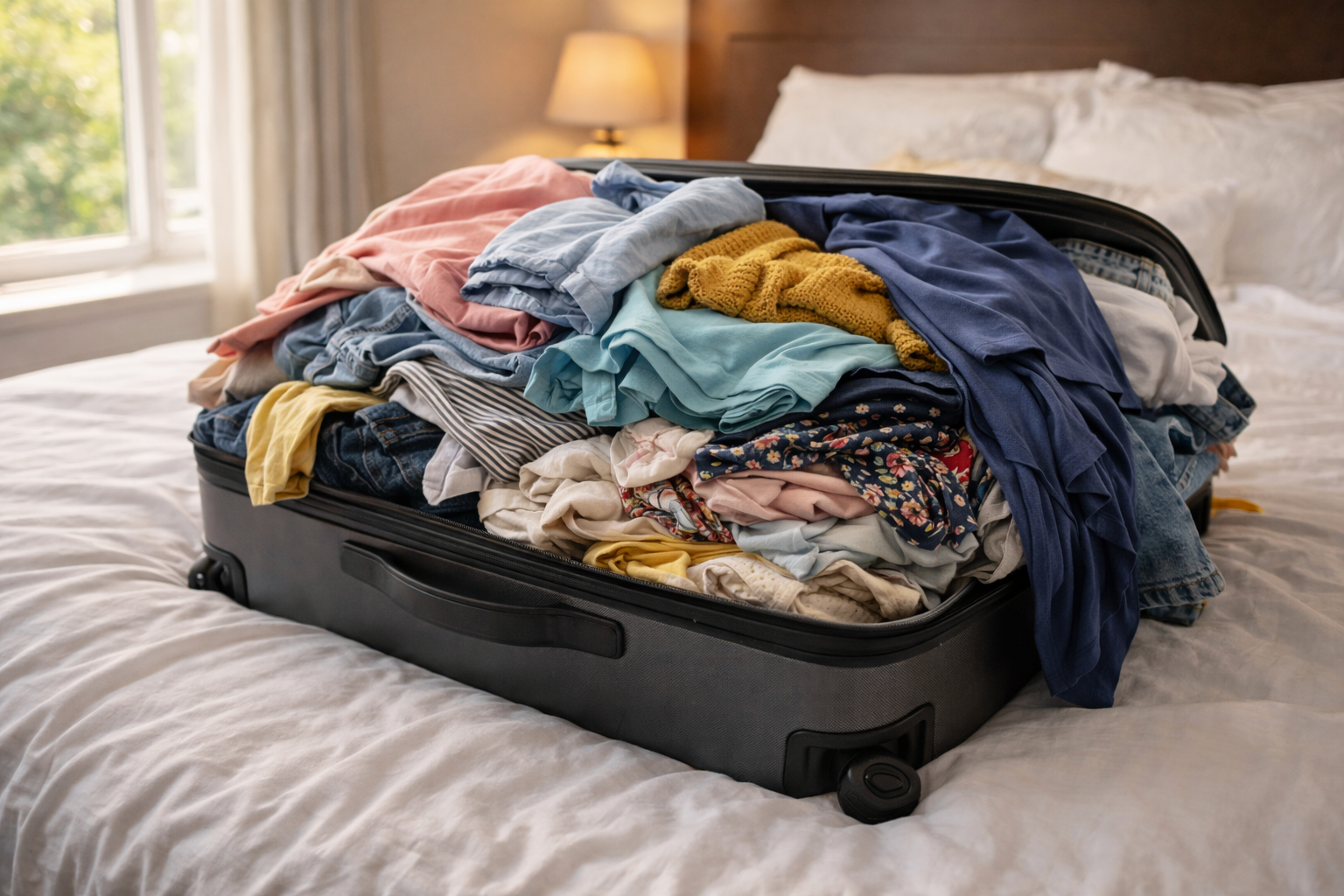
You’ve planned a trip, booked the flights and hotels, and you’re excited about the destination. Then you pack—and somehow that process undoes all your preparation. You arrive with the wrong clothes, without something essential, or with a bag so heavy it becomes its own burden. The trip you were looking forward to starts with frustration before you’ve even left the airport.
Packing mistakes are almost universal because most people approach packing emotionally rather than systematically. The anxiety of “what if I need this?” drives decisions more than realistic assessment of what you’ll actually use. Recognizing the common errors helps you pack in a way that supports your trip rather than complicating it.
Packing for the Trip You Imagine, Not the One You’re Taking
The most fundamental packing mistake is bringing items for scenarios that won’t happen. You pack workout clothes because you might exercise, a nice outfit for the fancy dinner you might find, three books because you might have downtime, an extra jacket because the weather might change.
This “might” thinking fills bags with unused items. At the end of most trips, people find clothes still folded, books unread, and equipment untouched. The gap between what you thought you’d do and what you actually did shows up clearly in unpacking.
The fix is ruthless honesty. Will you actually exercise on this trip, given your realistic schedule and energy levels? Do you have a specific dinner reservation that requires nice clothes, or just a vague idea? Is the weather forecast actually uncertain, or are you hedging against unlikely scenarios?
Pack for your actual trip—the one on your itinerary with your actual habits—not the idealized version where you become a different person who runs every morning and reads for hours.
Bringing Too Many Shoes
Shoes are one of the heaviest and bulkiest items in any bag. They take up disproportionate space, and yet people regularly bring three, four, or more pairs for a single trip.
In most cases, two pairs handle everything. One comfortable walking shoe for daily use, one dressier or more casual option depending on your trip type. That’s it. Unless your trip involves specific activities requiring specialized footwear (hiking, formal events, athletic pursuits), two pairs covers your needs.
The exception proves the rule: if you genuinely need three different types of shoes for planned activities, bring them. But examine that assumption. Can one versatile shoe handle multiple situations? Could you buy or rent specialized shoes at the destination?
Wear the bulkier pair during travel. This keeps your bag lighter and ensures your most space-consuming shoes aren’t taking up luggage room.
Ignoring Weather Reality
Packing for weather extremes that won’t happen wastes space. Packing without checking weather at all leaves you unprepared.
The first mistake is assuming weather will be more variable than forecast. A week out from your trip, forecasts are fairly reliable for general conditions. If it shows consistently warm temperatures, you probably don’t need a heavy jacket “just in case.” If it shows rain every day, you probably do need a rain layer.
The second mistake is checking weather once and ignoring changes. Look at the forecast again a day or two before departure. Conditions can shift, and a final check lets you adjust without last-minute scrambling.
The third mistake is not understanding the weather at your destination. Some places have dramatic temperature swings between day and night. Some are humid in ways that affect what you should wear. Some get cold wind despite warm air temperatures. Research beyond just the numbers helps you pack appropriately.
Overpacking Toiletries
The toiletries bag often contains duplicate items, full-size products, and things you don’t actually use at home.
Most destinations have stores. Unless you’re going somewhere genuinely remote, you can buy toothpaste, shampoo, or deodorant if you run out. Packing travel-size versions for your trip and replacing them at your destination if needed makes more sense than hauling full bottles.
Many people bring toiletries they don’t use regularly, thinking travel is somehow different. You don’t need three types of sunscreen, multiple medications you never take, or specialized products for problems you don’t have. Pack what you actually use in your daily routine, plus destination-specific items like insect repellent or high-SPF sunscreen if appropriate.
Hotel and rental toiletries cover basics in many cases. Shampoo, conditioner, soap, and lotion are usually provided. Bringing your own of these items is only necessary if you have specific product requirements.
Leaving Packing Until the Last Minute
Packing the night before departure—or worse, the morning of—leads to poor decisions. You’re tired, you’re rushed, and you don’t have time to think critically about what you need. Items get forgotten, bad choices get made, and the stress starts your trip on a negative note.
Packing a few days before gives you time to think about what you’re bringing and notice gaps. You can check weather forecasts closer to departure, realize you forgot something while there’s still time to buy or find it, and make decisions when you’re not panicking about a flight.
Early packing also lets you test your bag. Does everything actually fit? Is the bag liftable if you need to put it in an overhead bin? Do the clothes work together the way you imagined? Discovering these problems days before departure is better than discovering them at the airport.
Packing Without a System
Random packing—grabbing items as they come to mind and stuffing them in the bag—leads to forgotten essentials and chaotic luggage.
A system doesn’t have to be elaborate. It can be as simple as a checklist you use every trip, ensuring you don’t forget categories of items. It can be a consistent packing order that ensures important items are accessible. It can be a standard set of travel gear that goes in the bag first every time.
Packing cubes provide a physical system for many travelers. One cube for tops, one for bottoms, one for underwear—the categories force organization and make finding items easier throughout the trip.
Whatever your system, use it consistently. Developing a packing routine reduces the mental load of travel preparation and catches mistakes before they become problems.
Not Planning for the Journey Itself
Packing for the destination while ignoring transit is a common oversight. The things you need during a long flight or train ride—entertainment, snacks, medications, comfort items—should be accessible in your personal item, not buried in your checked bag or at the bottom of your carry-on.
Think through what you’ll want during transit. Headphones, a book or device, any medications you take on schedule, a change of clothes or toiletry kit for overnight flights, snacks for trips where meal timing is uncertain.
A sweater or jacket should be accessible regardless of destination temperature, since planes and airports are often cold. Having to dig through your bag mid-flight to find a warm layer is the kind of annoyance that good packing prevents.
Failing to Leave Space for the Return
Your bag should be able to close easily when you pack for the outbound trip. If you’re jamming the zipper shut before you’ve left, you’ve already created a problem.
Trips accumulate stuff. Souvenirs, gifts for people at home, items you buy because you need them during travel, things that take up more space after use than they did when packed new. Your return bag needs to hold all of this.
Packing with some space remaining ensures you can get home without buying another bag or shipping items. It also gives you flexibility during the trip—room for a market find, a gift opportunity, or practical items you didn’t anticipate needing.
Not Learning From Previous Trips
Each trip provides data about your packing. What you didn’t wear, what you wished you had, what was more useful than expected, what was a waste of space. Most people don’t review this information systematically.
After trips, take a few minutes to note what worked and what didn’t. Did you wear everything you brought? Was there something you wished you had? Did your toiletries bag contain items you never opened?
This reflection improves future packing. Over time, you develop a sense of what you actually need for different types of trips, and your packing becomes more efficient. The mistakes you made last time don’t need to repeat.
Packing well isn’t a talent—it’s a skill developed through attention and adjustment. The trips where things go wrong provide the best lessons, as long as you pay attention to what went wrong and why.