
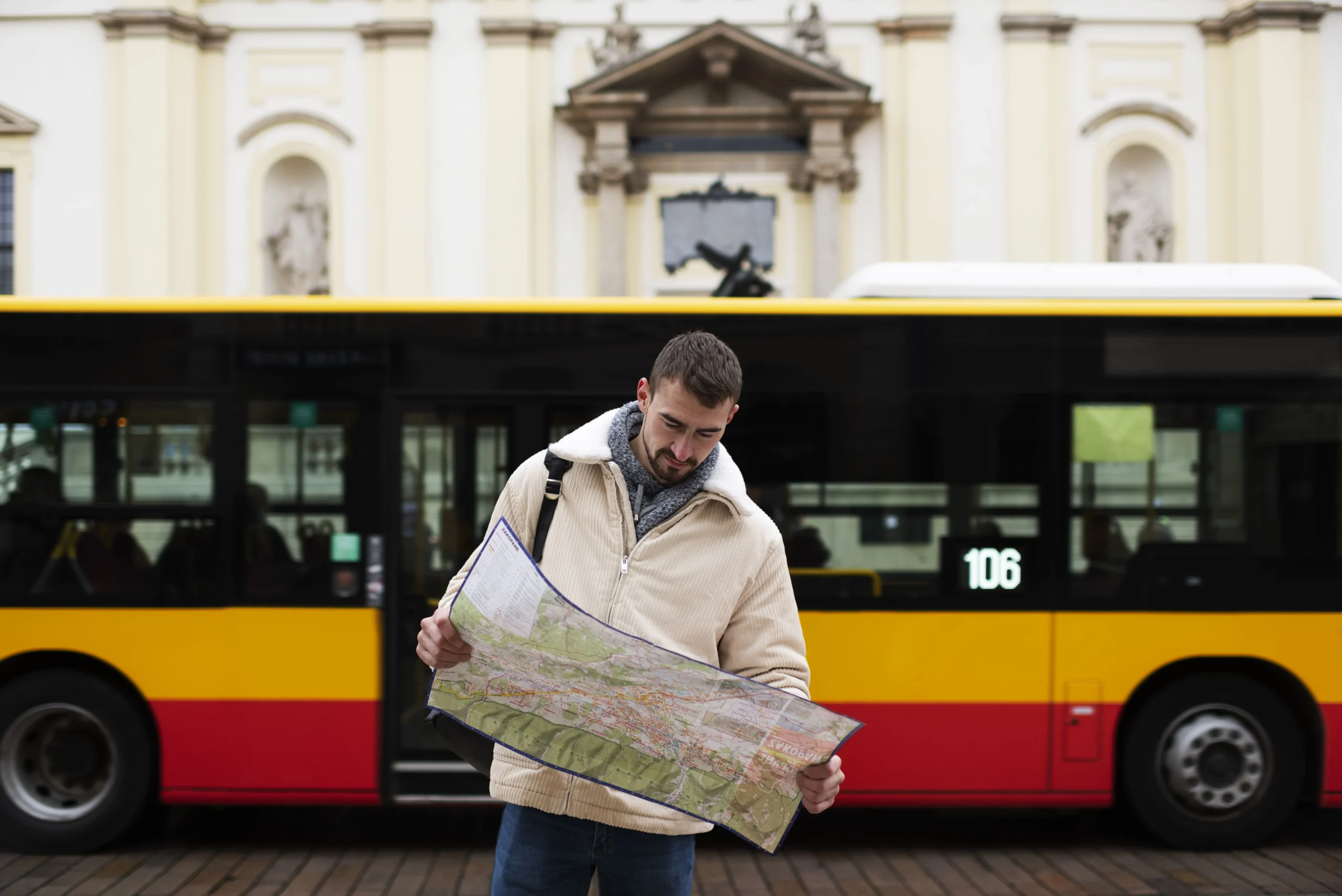
Decoding the City’s Nervous System
The difference between a “Tourist” and a “Traveler” is often found in how they move. Tourists rely on expensive hotel shuttles and taxis that sit in traffic. Travelers understand the local transit system—the subways, trams, ferries, and buses that form the lifeblood of a city.
In this guide, we will explore the universal logic of urban transportation. You will learn how to read transit maps, why “Transit Passes” are usually better than single tickets, and how to navigate the social etiquette of public moving spaces in the world’s most popular cities.
The Backbone: Subway and Metro Systems
In cities like London, Paris, New York, and Tokyo, the underground rail system is the most efficient way to travel. These systems are color-coded and generally follow a “Hub and Spoke” model. The key to mastering them is understanding the “Direction of Travel.” Usually, trains are labeled by their final destination (e.g., “Uptown/Downtown” or “Direction: Heathrow”).
Subways are immune to surface traffic, making them the most predictable way to reach an appointment or a flight. However, they can be overwhelming during rush hour. A pro tip for any metro system: Never stand in the middle of the platform or the top of an escalator. These are high-speed commuter zones; if you need to check your map, move to a wall or a quiet corner.
The Surface Level: Trams and Light Rail
Trams (or Streetcars) are common in European and Australian cities like Amsterdam, Prague, and Melbourne. They offer the speed of a train with the view of a bus. Trams are excellent for “Short-Hop” journeys within the city center.
Unlike subways, trams often require you to “validate” your ticket on the vehicle itself. Simply holding a ticket isn’t enough; you must tap it against a machine or insert it into a stamper. Failure to do this can result in a heavy fine from “Plainclothes Inspectors” who target unsuspecting tourists.
Waterborne Transit: Ferries and Vaporettos
In cities built on water—Venice, Istanbul, Sydney, Hong Kong, or Bangkok—the ferry is not a “tourist cruise”; it is a vital commute. Taking the Star Ferry in Hong Kong or a Vaporetto in Venice is often the cheapest way to see the city’s skyline from the water.
In these cities, the water transit is integrated into the main transport network. You can often use the same “Tap-and-Go” card for a bus as you can for a ferry. These routes are usually much faster than trying to navigate the bridges and tunnels that often become bottlenecks for cars.
The Revolution of the “Contactless” System
The greatest advancement in travel transportation in the last decade is the death of the paper ticket. In cities like London (Oyster/Contactless), Singapore (EZ-Link), and New York (OMNY), you no longer need to stand in line at a vending machine. You can simply tap your credit card or phone at the turnstile.
This “Contactless” system automatically calculates the “Daily Cap.” This means that after you take a certain number of rides, any additional travel that day is free. It removes the stress of trying to guess which “3-day pass” or “10-ride ticket” is the best value.
Practical Insights: Safety and Etiquette
While public transit is generally safe, it is the primary hunting ground for pickpockets. When on a crowded train or bus, wear your backpack on your front and keep your hand over your pocket. Avoid using your phone near the doors; a common theft involves a thief grabbing a phone just as the doors close and the train pulls away.
Regarding etiquette, always let passengers off the vehicle before you attempt to board. On escalators, there is usually a “Standing Side” and a “Walking Side” (in London and NYC, you stand on the right and walk on the left). Breaking this unwritten rule is the fastest way to mark yourself as a clueless visitor.
Moving Like a Local
Mastering local transport is the ultimate “Travel Unlock.” It gives you the confidence to stay in cheaper neighborhoods because you know you are only a 15-minute train ride from the center. It allows you to see the “Real City”—the commuters, the students, and the daily rhythm of life that exists far from the souvenir shops.
The next time you land in a new city, skip the taxi line. Head for the “Trains to City” sign, tap your card, and join the flow of the city. It is the most authentic journey you can take.
